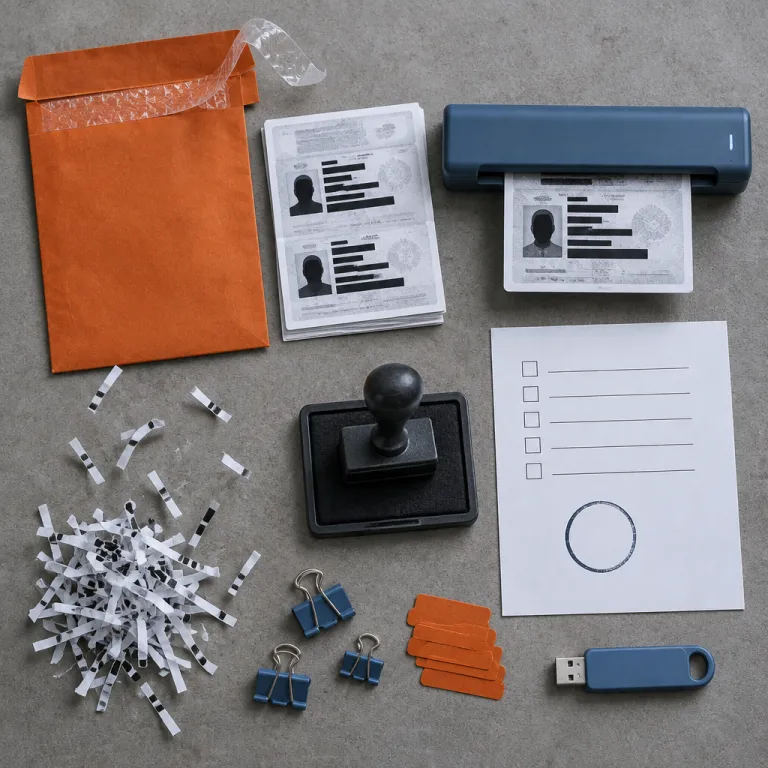
Why international background check GDPR rules reshape global hiring risk
Risk and Compliance Officers now treat every international background check GDPR workflow as a full regulatory project. When employers extend background checks to cross border hiring, they move from simple domestic screening to a complex matrix of General Data Protection Regulation obligations, Fair Credit Reporting Act style expectations, and sector specific rules. The only sustainable strategy is to design background screening and employment screening processes that treat every candidate as if their personal data were protected by the strictest regime in force.
Under the General Data Protection Regulation, any background check that involves processing personal data about candidates must rest on a clear legal basis under Article 6. For most checks employers run on job candidates, that legal basis will be either legitimate interest for fraud prevention and security (Art. 6(1)(f)), or explicit consent for sensitive data background elements such as criminal records or credit history that may fall under special categories of data in Article 9. Recital 47 clarifies that fraud prevention and network security can support legitimate interests, while Recital 51 highlights the need for additional safeguards when special category data is involved. The data controller must document why each category of data collected is necessary, how the data processed will be protected, and how long data retention will last before secure deletion.
Global hiring teams also need to align Fair Credit Reporting Act style transparency with European style data protection expectations. Even when the FCRA does not formally apply, its notice and dispute concepts help ensure compliance with candidate rights under the General Data Protection Regulation, especially around access to personal data and correction of inaccuracies in Articles 15 and 16. A defensible workflow links every background screening step to a written policy that explains which checks are run, which third party vendors are involved, and how social media or media checks are limited to what is strictly relevant.
Cross border background checks now sit at the intersection of privacy, labor, and sectoral regulation. A bank in Paris hiring a trader in Singapore must align European data protection rules, Singaporean employment laws, and internal risk appetites for fraud and sanctions exposure. Without a structured process, the same background check could be lawful in one jurisdiction, excessive in another, and outright prohibited where access to criminal records or social media data is tightly restricted.
Designing a defensible international background workflow therefore starts with a map of where data is collected, where data processed is stored, and which entities act as data controller or processor under Articles 4 and 28. Each country where you run background checks may impose specific limits on the type of personal data that can be used for employment decisions, especially around health, political opinions, or union membership. A robust governance framework forces every new check to pass through a legal, security, and ethics review before it becomes part of the standard employment screening package, with sign off recorded in a simple approval log that can be produced during audits.
GDPR principles applied to background screening and country level limits
The General Data Protection Regulation does not ban background checks, but it radically reshapes how employers justify them. Every international background check GDPR program must respect core principles in Article 5 such as purpose limitation, data minimization, accuracy, storage limitation, integrity, and confidentiality. In practice, that means each background check process must be broken into specific checks with a documented legal basis and a clear explanation of why this data background element is necessary for a particular employment role.
Purpose limitation requires that personal data collected for background screening is used only for employment screening decisions and related compliance obligations. If checks employers run for regulated roles include criminal record searches, sanctions lists, or financial integrity checks, they cannot later reuse that data for unrelated analytics or social media profiling. Data minimization then forces employers to ask whether each item of data processed is genuinely needed, for example limiting media checks to adverse professional media rather than broad lifestyle coverage.
Country specific rules add another layer of complexity to international background programs. In several European Union member states, access to criminal records for private employment screening is tightly controlled or reserved for specific sectors such as childcare, financial services, or security. For example, in France private employers generally cannot access the full criminal record and must rely on limited extracts; in Germany, candidates often provide a police clearance certificate directly; in Spain, criminal record certificates are typically restricted to roles with a legal requirement. Latin American and Asia Pacific jurisdictions may allow broader checks, but they often impose strict data retention limits and require that the candidate receives clear notice about each background check and any third party involved.
Risk Officers must therefore maintain a jurisdictional matrix that lists which checks are permitted, restricted, or prohibited in each country. A simple working matrix might include columns for: type of check (identity, employment history, criminal records, social media, credit), legal basis (legitimate interest, consent, legal obligation), local authority guidance, and maximum retention period. For example, some European countries treat social media screening as highly intrusive, while others allow limited social media checks if they focus on professional networks and respect data protection rules. When assessing liability for tavern owners or other regulated businesses, the same matrix helps determine whether a criminal background check is a legal requirement, a legitimate interest, or an excessive intrusion that could breach local privacy laws.
Across all these jurisdictions, the data controller remains responsible for ensuring that data collected for background checks is accurate, up to date, and securely stored. That responsibility extends to every third party vendor that performs employment screening, social media research, or media checks on behalf of the employer. Contractual clauses must therefore address data protection, data retention, and incident response, making it clear how each vendor will help ensure compliance with the General Data Protection Regulation and any local privacy statutes.
Lawful basis, consent design, and retention rules that survive audits
Choosing the right legal basis for processing personal data in background screening is the cornerstone of a defensible workflow. For many international background check GDPR programs, legitimate interest will be the primary legal basis for standard employment checks such as identity verification, education confirmation, and basic employment history. Sensitive checks, including criminal records or credit history, often require explicit consent, but that consent must be freely given, specific, informed, and revocable without coercion in line with Articles 7 and 9.
Consent design becomes particularly delicate when the power imbalance between employers and candidates is significant. A candidate may feel compelled to accept every background check to avoid jeopardizing employment, which can undermine the validity of consent under the General Data Protection Regulation and related guidance from the European Data Protection Board on consent in the employment context. To mitigate this, organizations should clearly separate mandatory checks based on legitimate interest or legal obligation from optional checks that truly rely on consent, explaining in plain language how each category of personal data will be used and how long data retention will last.
When a candidate withdraws consent during the background check process, the data controller must decide which data processed can be retained under another legal basis. For example, if a legal obligation requires retention of certain screening records for audit or regulatory reporting, that obligation may override the withdrawal of consent for those specific data elements. However, any data background elements that were collected solely on the basis of consent, such as certain social media checks, should be deleted promptly once consent is withdrawn.
Retention schedules must be granular rather than generic. A defensible international background workflow distinguishes between data collected for unsuccessful candidates, data retained for hired employees, and data stored for regulatory investigations or litigation holds. As a practical example, an organization might retain background check files for unsuccessful candidates for 6–12 months, keep core screening results for hired employees for the duration of employment plus 3–5 years, and preserve limited records for high risk regulated roles for up to 7–10 years where sector rules require it. Each category should have a documented retention period, after which personal data is either anonymized for statistical use or securely erased, with logs that demonstrate compliance during audits.
Fair Credit Reporting Act style transparency can strengthen these practices even outside the United States. By providing candidates with clear pre adverse and adverse action notices, copies of their background check reports, and an opportunity to dispute inaccuracies, employers reinforce both fairness and data protection principles. Embedding these steps into a standardized workflow, supported by tools such as a dedicated FCRA compliance audit workflow, helps global teams align domestic and international obligations while keeping the chain of custody intact.
Vendors, cross border transfers, and DSAR ready workflows
Every international background check GDPR program depends on a network of third party vendors, from criminal record researchers to social media analysts. Each vendor relationship introduces new data protection risks, because personal data about candidates flows across borders, systems, and legal regimes. The data controller must therefore treat vendor selection as a core compliance decision, not a simple procurement exercise focused only on price or turnaround time.
When assessing vendors for international background screening, Risk Officers should evaluate where data is stored, which sub processors are involved, and how cross border transfers are legitimized. Following the Schrems II judgment of the Court of Justice of the European Union and evolving guidance on international transfers from the European Data Protection Board, Standard Contractual Clauses, adequacy decisions, and transfer impact assessments are now standard tools to ensure compliance when data collected in the European Union is transferred to countries without equivalent data protection laws. Vendors should be able to explain how they minimize data processed, how they encrypt data in transit and at rest, and how they handle data retention and deletion on behalf of the employer.
Data subject access requests, often called DSARs, are a critical test of whether a background check workflow is truly audit ready. Candidates have the right to know what personal data has been collected about them, how it has been used, and which third party recipients have received it. A well designed process allows the data controller to retrieve all relevant background checks, social media reports, and media checks quickly, without compromising the integrity of the investigation or exposing confidential sources unnecessarily.
To achieve this, organizations should maintain a structured record of processing activities for each type of background check. These records, required under Article 30, should link each check to its legal basis, retention period, and vendor, making it easier to respond to DSARs and regulatory inquiries. Clear internal guidance should also explain when certain information can be redacted to protect the rights of others, such as whistleblowers or reference providers, while still giving the candidate meaningful access to their personal data.
Chain of custody is another essential element of a defensible workflow. Every time data background elements move between systems or vendors, logs should record who accessed the data, when, and for what purpose. A simple vendor evaluation checklist can help here: confirm storage locations and hosting region, identify all sub processors, review encryption standards, test incident response and breach notification processes, and agree service levels for DSAR responses and deletion requests. This level of traceability not only supports data protection obligations but also strengthens the employer’s position in disputes about the accuracy or fairness of employment screening decisions, especially when background checks span multiple jurisdictions and regulatory expectations.
Designing a global workflow that balances risk, privacy, and operational speed
Building an international background check GDPR compliant workflow is ultimately a design challenge rather than a purely legal exercise. Risk and Compliance Officers must orchestrate people, processes, and technology so that background checks are consistent, explainable, and proportionate to the risks of each role. The goal is to create a repeatable employment screening framework that accelerates hiring decisions while keeping regulatory exposure and privacy intrusions under tight control.
A practical starting point is to segment roles into risk tiers and align checks accordingly. High risk positions in finance, healthcare, or critical infrastructure may justify more intensive background screening, including targeted media checks and carefully scoped social media reviews, while lower risk roles rely on basic identity and employment verification. This tiered approach helps demonstrate that data collected and data processed are proportionate, supporting both legitimate interest arguments and broader data protection principles.
Workflow design should also specify where data sits at each stage of the background check process. For example, initial candidate data may reside in an Applicant Tracking System, while detailed background reports are stored in a separate, access controlled platform with strict data retention rules. Clear role based access controls ensure that only authorized personnel can view sensitive personal data, reducing the risk of unauthorized disclosure or misuse.
Operational teams benefit from visual process maps that show every step from candidate consent to final hiring decision. These maps should highlight decision points, such as when a potentially adverse background check result triggers a review by legal or compliance, and when a candidate must be given an opportunity to explain or dispute findings. In one global technology company, for example, a flagged criminal record in a low risk role automatically triggered a short, structured interview with the candidate and a legal review before any decision was made, which significantly reduced unnecessary rejections and improved perceived fairness. Embedding links to internal policies, jurisdictional matrices, and guidance on topics like understanding mugshots or local criminal record practices helps recruiters apply complex rules consistently.
Finally, continuous improvement is essential for keeping international background workflows defensible over time. Regular audits should test whether checks employers run still match current legal requirements, whether data retention schedules are respected, and whether vendors remain aligned with evolving data protection expectations. Feedback loops from hiring managers, candidates, and regulators then inform adjustments to the scope of checks, the handling of social media data, and the balance between risk mitigation and respect for individual privacy.
Managing social media, adverse information, and high risk sectors under GDPR
Social media and open source intelligence have become tempting tools for employers seeking deeper insight into candidates. However, integrating social media checks into an international background check GDPR program raises acute data protection and fairness concerns, especially when personal data from private profiles or unrelated posts is swept into employment decisions. A disciplined approach is required to ensure that only relevant, job related information is collected and that candidates are treated consistently across jurisdictions.
Organizations should define clear criteria for when social media screening is appropriate and which platforms may be reviewed. Professional networks may be suitable for verifying employment history or professional claims, while personal platforms often contain sensitive data that is off limits under data protection rules. Any social media or media checks should be conducted by trained specialists who understand both the legal basis for processing personal data and the cultural context of the content they review.
High risk sectors such as financial services, healthcare, and hospitality face particular pressure to run thorough background checks. For example, tavern owners and other alcohol related businesses may rely on criminal background screening to manage liability and protect customers, but they must still respect local privacy laws and General Data Protection Regulation principles. In these environments, a carefully calibrated mix of criminal record checks, sanctions screening, and targeted media checks can provide robust risk mitigation without drifting into disproportionate surveillance.
When adverse information emerges during background screening, the response process must be structured and transparent. Candidates should be informed about the findings, given a chance to provide context or corrections, and told how long the relevant data will be retained in the employer’s systems. In one hospitality chain, for instance, a candidate’s old social media post was initially flagged as a risk, but a documented review process allowed the candidate to explain the context, leading to a revised assessment and a successful hire. This approach not only aligns with Fair Credit Reporting Act style fairness but also reinforces the General Data Protection Regulation’s emphasis on accuracy, accountability, and respect for individual rights.
Ultimately, managing social media and adverse information within international background programs is about governance rather than technology. Policies must spell out which data background elements are considered, how data collected from open sources is verified, and when it is appropriate to escalate findings to legal or compliance teams. By treating every background check as a regulated data processing activity, employers can balance risk management with the fundamental rights of candidates, even in the most sensitive and highly regulated sectors.
FAQ: international background checks and GDPR compliant workflows
How does GDPR affect international background checks on non EU candidates
The General Data Protection Regulation applies whenever an employer established in the European Economic Area processes personal data for background checks, even if the candidate lives outside Europe. It also applies when an employer outside Europe targets EU based candidates for employment and runs background screening on them. In both cases, the same principles of lawful basis, data minimization, transparency, and data retention control must be applied consistently.
Can employers rely on consent alone for all background screening activities
Relying solely on consent for background checks is risky under the General Data Protection Regulation because the power imbalance between employers and candidates may undermine the freedom of consent. Many organizations instead use legitimate interest or legal obligation as the primary legal basis for standard checks, reserving explicit consent for particularly sensitive data such as certain criminal or financial records. This mixed approach provides a more defensible framework during regulatory audits or disputes.
What is the best way to handle social media screening under GDPR
The safest approach is to limit social media screening to clearly defined, job related purposes and to focus on professional platforms where possible. Employers should inform candidates that social media checks may occur, explain which types of content are relevant, and avoid collecting sensitive personal data that is unrelated to the role. Using trained third party specialists and documented criteria helps reduce bias and supports compliance with data protection principles.
How long should background check data be retained after hiring decisions
Retention periods should be tailored to the purpose of the background check and any applicable legal obligations. Many organizations keep data for unsuccessful candidates only as long as necessary to defend against potential discrimination claims, while retaining limited records for hired employees to meet regulatory or contractual requirements. Clear retention schedules and automated deletion or anonymization routines are essential to demonstrate compliance with storage limitation rules.
What should organizations do when a candidate disputes background check results
When a candidate disputes background check findings, employers should pause any adverse decision, investigate the claim, and request verification or correction from the relevant third party vendor. Providing the candidate with a copy of the report and a clear explanation of the dispute process aligns with both Fair Credit Reporting Act style fairness and General Data Protection Regulation accuracy requirements. Documenting each step of the investigation also strengthens the employer’s position in any subsequent legal or regulatory review.